
Tiles are often chosen with the belief that once they are installed, they are sorted for life. They are strong, easy to maintain, and designed to handle daily use in homes, offices, hotels, and commercial spaces. But over time, some changes happen. The tiles are still there, still solid, yet they no longer feel as clean, bright, or polished as they once did. Slowly, the tiles start to make the entire space look older and less cared for than it actually is.
This is the point where many people assume replacement is the only solution. But what most people do not realise is that in many cases, the tiles themselves are not damaged. They are simply worn, contaminated, or poorly maintained over time. Before committing to the cost, disruption, and downtime of tile replacement, tile restoration is another option worth considering.
Understanding when to restore and when to replace allows homeowners, facility managers, HR teams, and building owners to make informed decisions, control costs, minimise disruption, and extend the lifespan of their spaces.
COMMON CAUSES OF TILE WEAR
Tiles do not fail overnight. Their deterioration is gradual, and often caused by factors such as:
- High foot traffic in offices, homes, hospitals, and commercial spaces
- Using harsh cleaning chemicals that strip protective finishes
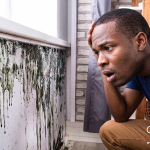
- Moisture penetration, especially in bathrooms, kitchens, and balconies
- Grease build-up in kitchens and cafeterias
- Poor ventilation leading to mould or mildew in grout lines
In most of these cases, the tiles themselves are still structurally sound and instead of replacing them, tile restoration is often sufficient.
WHAT IS TILE RESTORATION?
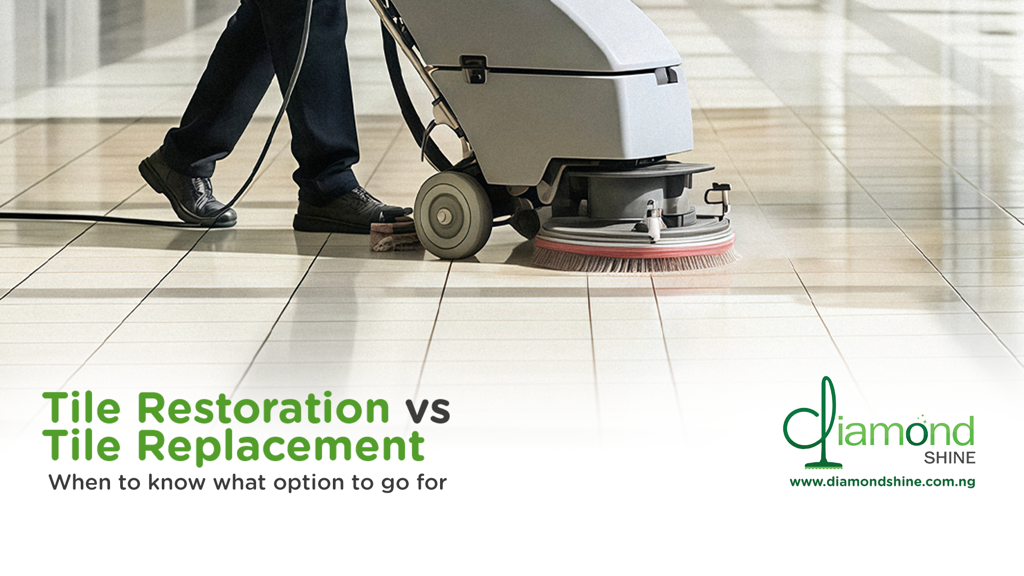
Tile restoration is a professional deep treatment process that revives existing tiles by restoring their appearance, hygiene, and protective finish. Unlike standard cleaning, which only removes surface dirt, restoration tackles deep stains, grout discolouration, worn finishes, and embedded grime that normal cleaning cannot fix.
A proper tile restoration service usually includes:
- Industrial-grade deep cleaning to remove stubborn dirt, grease, and contaminants
- Intensive grout cleaning to lift deep stains and restore original colour
- Stain treatment for mineral deposits, rust marks, mould, and chemical stains
- Re-polishing or buffing to restore shine where applicable
- Sealing of tiles and grout to protect against future staining and moisture penetration
When done correctly, tile restoration can significantly improve the appearance of old tiles, often making them look close to new.
And yes, the difference is always clear.
WHEN TILE RESTORATION IS THE RIGHT CHOICE
Tile restoration is ideal when the problem is cosmetic or hygiene-related, not structural.
Here are situations where restoration is often all you need.
- The Tiles Are Intact but Look Old or Dirty
If your tiles are not cracked, loose, or broken, but simply look dull, stained, or discoloured, restoration is usually the best option.
- Grout Lines Are Dark, Stained, or Mouldy
Grout absorbs dirt, moisture, and bacteria easily. Professional grout restoration can completely transform the look of a tiled surface without a need to replace the tiles themselves.
- The Space Needs a Visual Upgrade Without Major Renovation
For facility managers and HR teams, downtime is expensive. Tile restoration allows offices, commercial buildings, and shared spaces get a facelift without the noise, dust, and disruption of tile replacement.
- Budget Is a Concern, but Standards Are Still High
Replacing tiles involves demolition, disposal, labour, materials, and often unexpected repairs underneath. Restoration delivers visible improvement at a fraction of the cost, while still meeting cleanliness and presentation standards.
- You Want to Extend the Life of Existing Tiles
Restoration combined with sealing protects tiles from future damage, helping them last significantly longer.
WHEN TILE REPLACEMENT IS A MUST
As powerful as restoration is, there are times when replacement is unavoidable. When your floor shows any of these signs, it’s best to consider replacing them.
- Cracked, Broken, or Chipped Tiles
If tiles are physically damaged, restoration cannot fix structural failure. Cracks allow moisture to seep underneath, which can lead to bigger problems over time.
- Loose or Hollow-Sounding Tiles
Tiles that have lost adhesion to the subfloor need to be removed and reset as restoring the surface will not address the underlying issue.
- Severe Water Damage Under the Tiles
If there is long-term water leakage that has compromised the subfloor, replacement is necessary to prevent mould growth and structural damage.
- Outdated Layout or Design Changes
If the goal is a complete design overhaul, different tile size, colour, or layout, restoration cannot change the design itself. In this case, replacement becomes a design decision, not a maintenance one.
LET US HELP YOU DECIDE THE SMARTER OPTION
In many homes, offices, hotels, and commercial facilities, tiles are replaced when they could have been restored beautifully. The result is unnecessary cost, avoidable disruption, and wasted materials.
Tile restoration addresses the condition of existing tiles, restoring appearance, hygiene, and protection without removing what already works. Tile replacement, on the other hand, is necessary only when structural integrity or design requirements demand it.
Our tile restoration service is designed to assess, restore, and protect your tiles using industry-grade equipment, proven techniques, and a results-driven approach. If your tiles are restorable, we’ll get to work immediately and if replacement is truly necessary, we will tell you honestly.
Contact us today to book a professional tile assessment and restoration service.